Power of Grower
Understanding Peas Crop Variety (Meteor): A Comprehensive Guide for Punjabi Farmers
Understanding Peas Crop Variety (Meteor): A Comprehensive Guide for Punjabi Farmers
#AGRICULTURE (VEGETABLE) #AGRIFARMING #SEEDS
Basha Groups
1/5/20264 min read
Understanding Peas Crop Variety (Meteor)
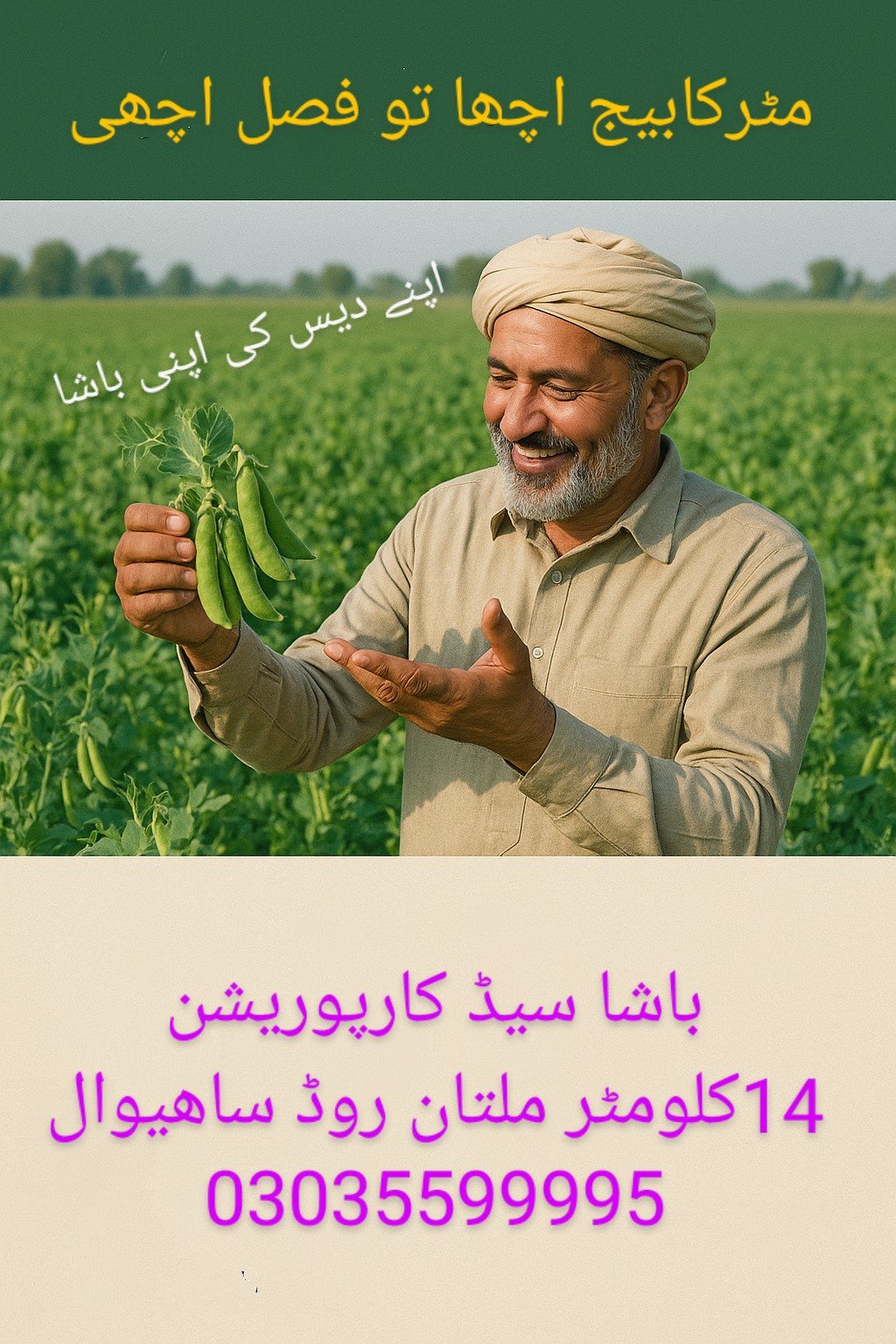
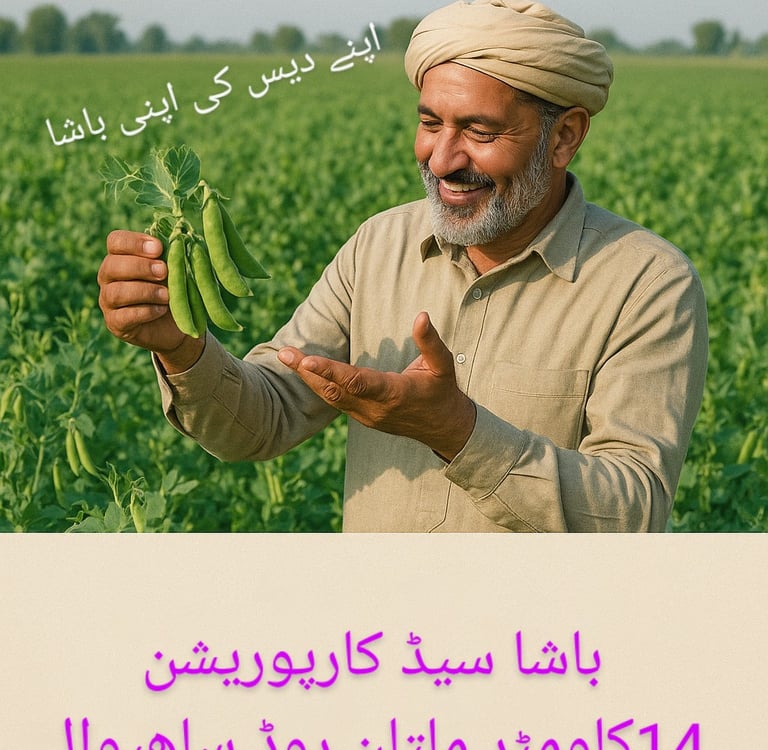
The Meteor variety of peas has garnered significant attention among farmers in Punjab due to its unique characteristics and robust performance. Introduced and developed for its adaptability to diverse climatic conditions, the Meteor pea offers remarkable growth potential that makes it a favored choice for agricultural production in the region. One of its standout features is its semi-vining growth habit, which allows the plants to reach a medium height while maintaining compactness, making them easier to manage within farming systems.
Farmers appreciate Meteor peas for their impressive yield potential. Under optimal growing conditions, this variety can produce a substantial quantity of pods, which typically house several well-formed peas. The average yield per acre can range from 1,800 to 3,300 kilograms, depending on the management practices employed and prevailing weather conditions. This high yield, coupled with its shorter maturity period compared to other varieties, positions Meteor peas as a profitable crop for farmers aiming to maximize their return on investment.
The Meteor variety is also recognized for its resilience and pest resistance. Specifically, it demonstrates a robust ability to withstand common pests such as aphids and whiteflies, minimizing the need for intensive pest management strategies. This intrinsic pest resistance not only leads to reduced chemical usage but also supports sustainable agricultural practices. Furthermore, its adaptability to different soil types and resistance to adverse weather conditions contribute to its popularity among local farmers.
Developed through careful selection and breeding initiatives, the Meteor pea variety reflects the ongoing efforts to enhance crop quality and yield. Its consistent performance and favorable agronomic traits make it an attractive option for farmers seeking to improve their livelihoods. In summary, the Meteor variety of peas stands out as a reliable and efficient crop that embodies the modern agricultural advancements in Punjab.
Fertilizer Planning for Meteor Peas
For optimal growth of Meteor peas, creating a tailored fertilizer plan is essential. This crop thrives best when it receives a balanced supply of necessary nutrients. Key macro and micronutrients that support the healthy development of Meteor peas include nitrogen (N), phosphorus (P), and potassium (K), as well as essential trace elements like iron, manganese, and zinc. A well-rounded fertilization strategy not only enhances yield but also improves the overall quality of the peas produced.
Timing of fertilizer application is critical when cultivating Meteor peas. Typically, farmers should apply fertilizers during the soil preparation phase prior to planting, as well as at specific growth stages during the crop cycle. A combination of basal and top-dressing fertilizers can be employed. The basal application, which occurs before planting, helps establish strong root systems, while top-dressing at key intervals promotes vigorous vegetative growth and flowering. Early application of nitrogen is particularly important for stimulating active leaf development.
When selecting fertilizers for Meteor peas, it is crucial to consider their formulation. A balanced fertilizer with a ratio of 10-20-20 NPK or similar configurations can be beneficial based on specific soil tests. Farmers should prioritize using organic fertilizers or well-composted manure as these improve soil structure and provide slow-release nutrients, essential for sustained growth. Additionally, incorporating bio-fertilizers can enhance nutrient availability while aiding soil health.
To customize the fertilization strategy efficiently, soil testing plays a vital role. Conducting a soil test enables farmers to understand the nutrient composition of their soil, allowing for a more data-driven approach to fertilizer application. By adhering to these guidelines, farmers can significantly improve their Meteor peas crop, achieving both higher yields and better quality produce.
Water Management Strategies
Effective water management is crucial for cultivating the Meteor pea crop successfully, particularly in the diverse climatic and soil conditions found in Punjab. The Meteor variety, like other peas, is sensitive to moisture levels, and proper irrigation techniques can significantly enhance yield and growth rate.
Firstly, the best approach is to employ a drip irrigation system. This system delivers water directly to the root zone, minimizing evaporation and ensuring efficient water usage. For Meteor peas, it is essential to maintain soil moisture levels at around 70-80% of field capacity, particularly during their flowering and pod formation stages. Regular monitoring of soil moisture will inform farmers of when irrigation is needed, helping to prevent both overwatering and drought stress.
Moreover, scheduling irrigation sessions based on weather forecasts is critical. During the peak summer months, increased evaporation rates necessitate more frequent irrigation sessions. In contrast, during the cooler months or rainy seasons, the frequency of watering can be reduced. Using tensiometers can provide real-time insights into soil moisture levels, guiding timely irrigation interventions.
Additionally, farmers should consider practicing rainwater harvesting to capture and store rainfall runoff. This not only conserves water resources but also provides a sustainable solution during dry spells. Employing mulching techniques, such as using straw or plastic, can further help retain soil moisture by reducing surface evaporation.
Lastly, understanding the water requirements during varying growth stages is vital. For Meteor peas, pre-sowing and early growth stages require less water, gradually increasing as the plants develop and move into the flowering and podding phases. By adapting these water management strategies, farmers can optimize conditions for their Meteor pea crop, resulting in better yields and resource efficiency.
Soil and Climatic Requirements for Meteor Peas
Successful cultivation of Meteor peas hinges on understanding their specific soil and climatic needs. Firstly, the type of soil plays a crucial role in achieving optimal growth and yield. Meteor peas thrive in well-drained, loamy soils that possess a balanced mix of sand, silt, and clay. This soil type ensures adequate drainage while retaining sufficient moisture. Furthermore, the ideal pH range for cultivating Meteor peas falls between 6.0 and 7.5. Soils within this pH range enhance nutrient availability, encouraging healthy plant development. Regular soil testing is advisable to maintain these pH levels, ensuring the soil remains conducive for growing peas.
Organic matter is another important consideration, as it improves soil fertility and structure. A soil rich in organic material helps retain moisture and provides essential nutrients to the Meteor peas. Farmers are encouraged to incorporate organic compost or well-rotted manure into the soil before planting to enhance its overall quality.
Climatic conditions are equally significant in the cultivation of Meteor peas. They prefer a temperate climate, with optimal growth occurring in temperatures ranging from 15°C to 30°C. Therefore, in Punjab, the ideal planting period typically falls between late September and early November. This timing takes advantage of the region's cooler temperatures, allowing the peas to develop robustly before facing the heat of summer.
Additionally, Meteor peas are relatively resilient to mild frost, making them suitable for early spring and late autumn planting. However, extreme temperature fluctuations can adversely affect their growth. It is important for farmers to monitor climatic forecasts and prepare accordingly, utilizing protective measures if unexpected weather events arise. By ensuring the right soil conditions and monitoring climatic factors, Punjabi farmers can maximize their yields of the Meteor peas variety.